Herderin's approach is to use the best materials nature has to offer, and let nature speak for itself.
Our fiber sourcing invests in equitable land ownership, co-op family farms, carbon positive farming, and US organic and regenerative textiles.
Herderin clothing is made from Climate Beneficial™ and US Regenerative Wool, Climate Beneficial™ and Texas-Grown Organic Cotton, and Regenerative Silk. We focus on regional sourcing, and so much of our fiber is grown or raised here in California.
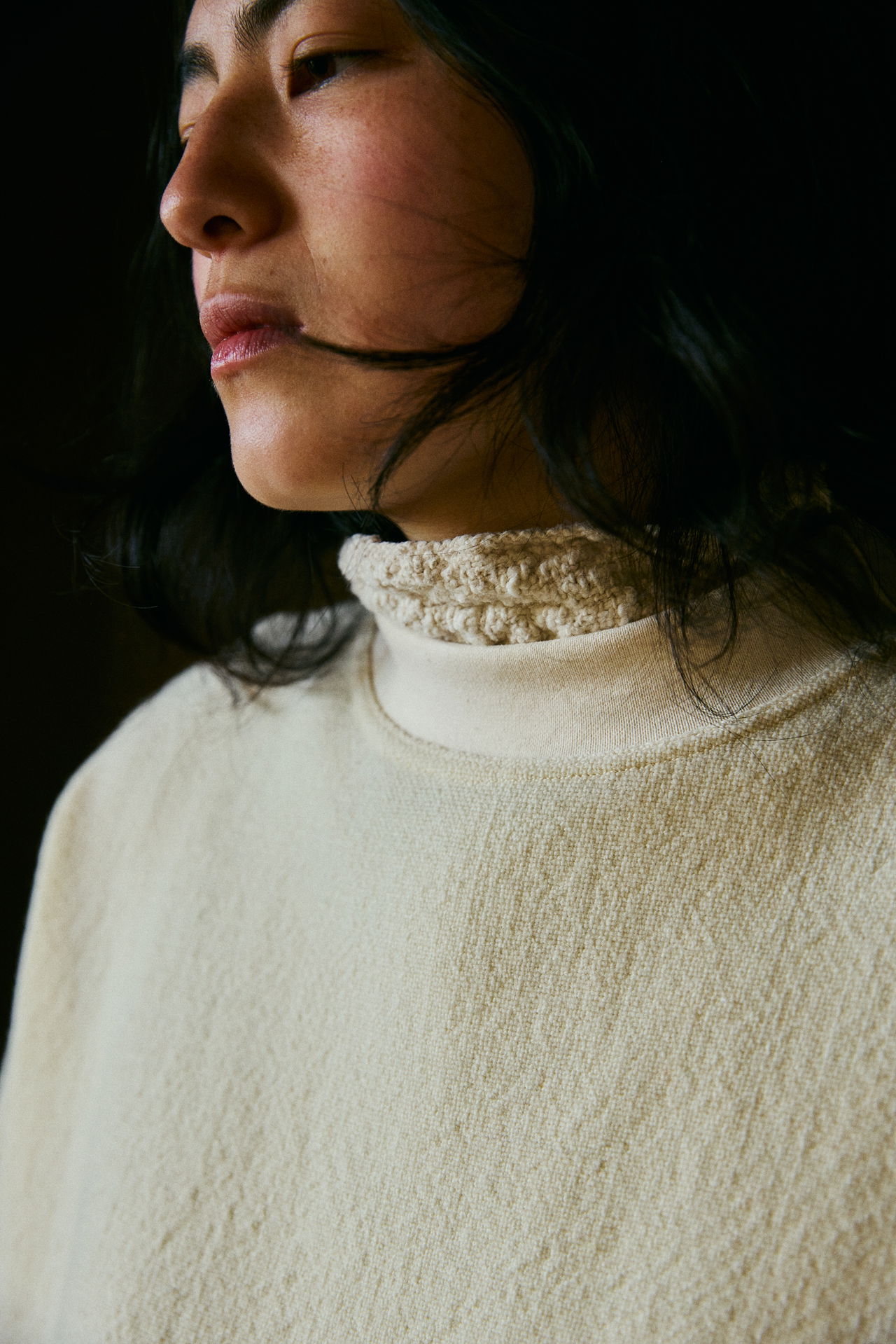
Herderin fabrics are treated like food: we want it fresh, high quality, and as direct from the purveyor as possible. We are not interested in manipulating the fabric too much, as we believe that the beauty and integrity of Earth materials are able to speak for themselves. We honor the material rather than wanting to mask or change it to be of fashion.
Our commitment is to longevity.
/
Climate Beneficial™ Wool is a by-product of employing carbon farming practices. Sheep raised on a farm that can sequester carbon back into the ground, as opposed to sending it into the atmosphere, are reducing their carbon footprint and creating a beneficial impact on the environment.
Herderin sources Climate Beneficial™ wool from Oregon and California farms, which are then sent to New Hampshire to be woven.
This wool has a woven, thick texture. It is not itchy.
Unlike our Rocky Mountain Merino Wool, our Climate Beneficial wool will shrink if washed in warm water. Be sure to cold wash and flat dry Herderin garments made from Climate Beneficial™ wool.
Climate Beneficial Wool™ is verified by Fibershed's Climate Beneficial Verification program.
The California Cotton & Climate Coalition, known as C4, aims to build capacity within all stakeholders to grow, source, and develop Climate Beneficial™, farm-forward textiles and supply chains in the future without the help of the coalition.
C4 is led by Fibershed in partnership with White Buffalo Land Trust, Torus, Materevolve, Chico State University, Agri Technovation, Carbon Cycle Institute, Bowles Farming Company and Stone Land Company.
C4 is a coalition working together to evolve California cotton growing. This work can create a roadmap for all California cotton growers.
Together, we are supporting Climate Beneficial™ cotton. Climate Beneficial™ cotton improves soil health and water holding capacity, building and measuring soil carbon, and reducing the use of synthetic chemistry.
Food crops are rotated with cotton that include corn, wheat, garlic, onions and tomatoes. These transitions for cotton systems simultaneously affect food growing as well. Our Climate Beneficial™ cotton is hypoallergenic.
Our Organic Cotton is grown in Texas by the
Texas Organic Cotton Co-op
comprised of family farms, and is processed in North Carolina by a family-owned mill.
Due to using organic farming practices, our organic cotton mainly relies on rainwater and has no toxic chemicals present.
Our Organic Cotton is soft to the touch, flexible, durable and processed with care to preserve the natural qualities of the flower. Our oganic cotton is hypoallergenic.
Sourced from the Rocky Mountains, our merino and jersey wool is sheered from US merino sheep that are raised in the Rocky Mountain region of the United States.
The wool is shorn without harming the sheep, who graze and live freely on acres upon acres of natural land.
Our wool partner is a signatory of the United Nations Global Compact and has third party audited wool sourcing standards. Herderin wool is not only authentic quality, but also of human rights and animal welfare standards.
Herderin merino wool is some of the best quality wool produced in the US for fineness, color and length.
Our merino wool is unique in that it is naturally insulating while breathable; easy to care for, and will not shrink in the wash. Wool is also easy to clean because of the keratin fibers that naturally make it less able to retain odors. Our merino wool is hypoallergenic.
Herderin sews with GOTS-certified 100% organic cotton thread supplied by a small woman-owned US company.
Our plant dye partner, Botanical Colors, sources natural dyes from various locations, including a network of US-based regenerative and organic farmers, global suppliers for specialty items like indigo and cochineal, and even from agricultural and food waste.
Our Novato, California dye house uses OurCarbon organic waste and Oeko-Tex certified non-toxic dyes, and has a circular dye waste system.
Herderin no longer uses biodegradable rubber / cotton elastic for our waistbands. Rubber does not have quality recovery, and will stretch out indefinitely with moderate use.
The elastic from Herderin waistbands can be removed if you somehow need to compost your Herderin garment.
Silk is a renewable fiber produced by silkworms that feed on mulberry leaves, creating a closed-loop natural cycle that can be repeated indefinitely without depleting resources. When mulberry trees are grown using regenerative practices, sericulture supports biodiversity and soil health while sequestering carbon. The fiber itself is biodegradable, returning to the earth at the end of its lifecycle. Silk is naturally hypoallergenic, resisting dust mites, mold, and fungus, making it an excellent choice for sensitive skin. Its inherent breathability, moisture-wicking properties, and temperature regulation create garments that adapt to your body's needs while lasting decades with proper care—a true investment in both wardrobe longevity and ecological stewardship.
Textile
Climate Beneficial™ Wool
Climate Beneficial™ Cotton
US Organic Cotton
Regenerative US Merino Wool
Other Materials
Renewable Silk