
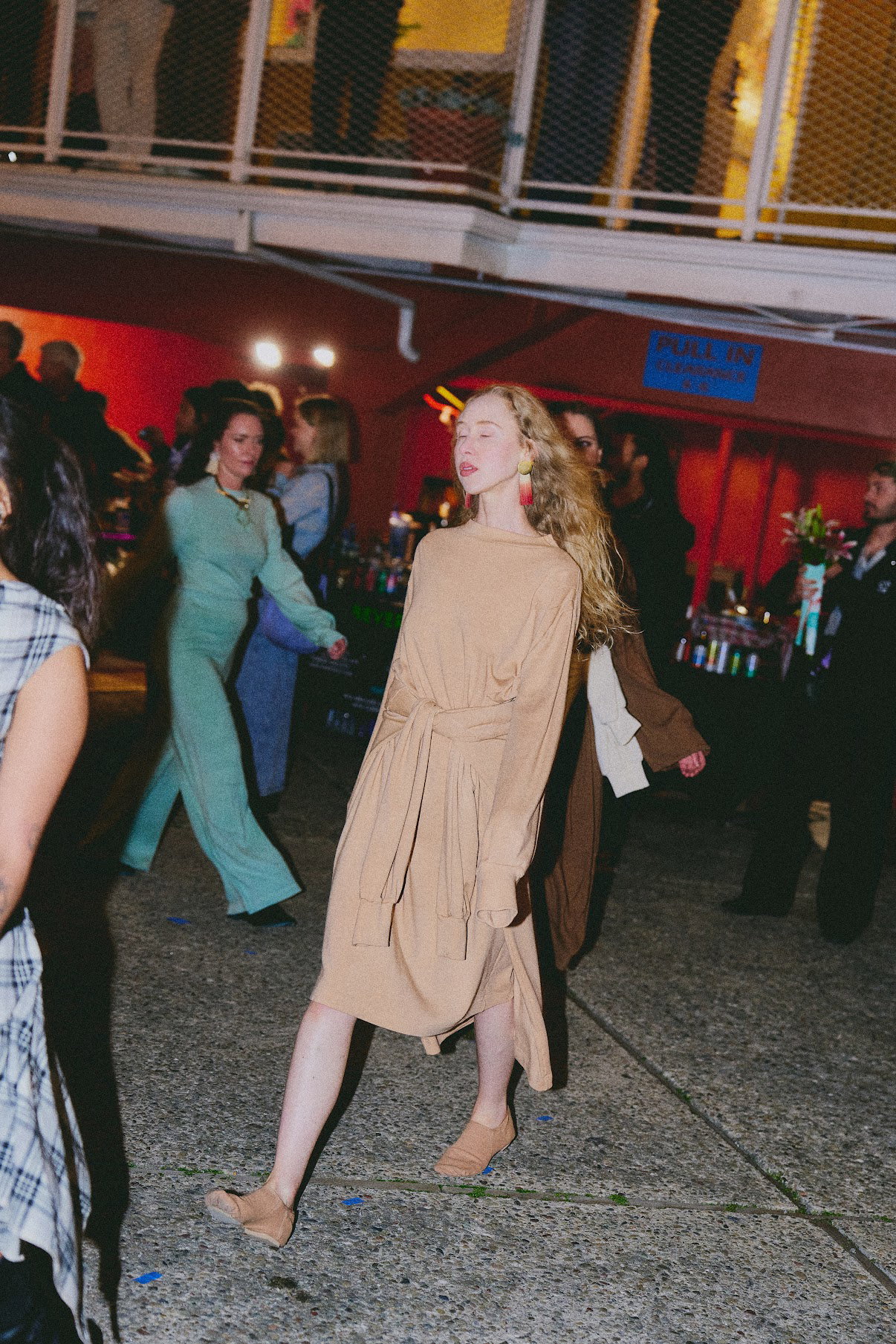
Herderin began without mirrors. It started with thousands of garments made by hand and worn without looking, tested by how they felt rather than how they looked. That practice became the design method: body first, appearance second. No buttons or hardware to work around. No statement or trend to outlast.
There are mornings when you put something on and everything settles. The fabric, the weight of it, the way it moves when you do. You stop thinking about what you're wearing and start being somewhere.
That's what Herderin is after.
Clothing designed to be in your body
Clothing is self-expression, and it is also something you live in. Herderin designs for the living-in first, so that expression can come from how you feel and not only from how you look. We call this embodied self-knowledge, a way of dressing that begins in the body and carries outward.
Herderin was founded by Alix Vasquez, PhD, a sociologist of the body and embodiment. It began in the mountains of Vermont's Northeast Kingdom, where she was living close to the land and making clothing by hand. The name means a woman who lives semi-nomadically and tends the land. Here that tending reaches the whole ecosystem: where fiber comes from, how a garment is made, and who it's for. Her research program, Clothing the Self, grew out of that same handwork of sewing and dyeing. Herderin draws on land, research, and craft, not fashion. It is kept intentionally minimal, so the clothing gives comfort and gets out of the way.
Designed in San Rafael and sewn in San Francisco, less than 15 miles apart.
Our fibers are grown and processed in the US: Climate Beneficial™ wool, regenerative Rocky Mountain merino wool, Climate Beneficial™ C4 cotton from California's Central Valley, and Texas co-op organic cotton.
The only fiber we import is silk.
Garments are plant dyed with indigo and cutch by Kathy Hattori of Botanical Colors, and our carbon pigment dye comes from organic waste.
We are Fibershed certified, and we know the names of the people who sew your clothing.
Every morning, you get dressed. You rarely ask why. The Unbecoming Sessions slow that moment down through three experiments: one garment, one swap, and time without mirrors. You learn to dress by feel, build a wardrobe that lasts, and come to know yourself beyond what you wear.
Learn more →
Clothing designed to be in your body
Origin
Feeling
Philosophy
Founder
Materials and Provenance
The Unbecoming Sessions